Cabinet Doors & Fronts · Arts & Crafts / Craftsman
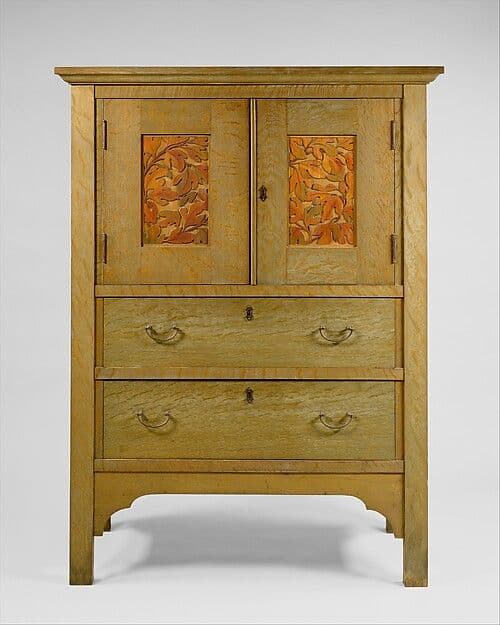
M. H. Baillie Scott Inlaid Work Cabinet (c. 1900)
A mahogany work cabinet designed by Mackay Hugh Baillie Scott and made by John P. White at the Pyghtle Works in Bedford, England, inlaid with holly, pewter, bone, ebony and mother-of-pearl.
Design characteristics
Baillie Scott was one of the most inventive British Arts and Crafts architects, and his furniture for John P. White combined simple, boxy forms with jewel-like inlaid decoration. This cabinet is plain in outline but its doors carry stylized floral inlay in several materials, with wrought-iron hardware. It is a model for how to make a modest cabinet special: keep the joinery honest and the shape simple, and concentrate decoration in one well-placed inlaid panel.
Classification
- Category
- Cabinet Doors & Fronts
- Material
- Wrought iron, Mother of pearl, Mahogany, Ebony, Holly
- Motifs
- Inlay
- Date
- c. 1900
- Maker or designer
- Designed by Mackay Hugh Baillie Scott (English, 1865-1945) Made by John P. White, Pyghtle Works (Bedford, England, active c. 1900/1910)
- Recorded medium
- Mahogany, holly, pewter, bone, ebony, and mother-of-pearl; wrought iron and glass handles
- Dimensions
- 121.8 × 66.4 × 42.5 cm (48 × 26 1/2 × 16 3/4 in.)
- Evidence
- Documented historical object
- Source
- Art Institute of Chicago
Architectural context
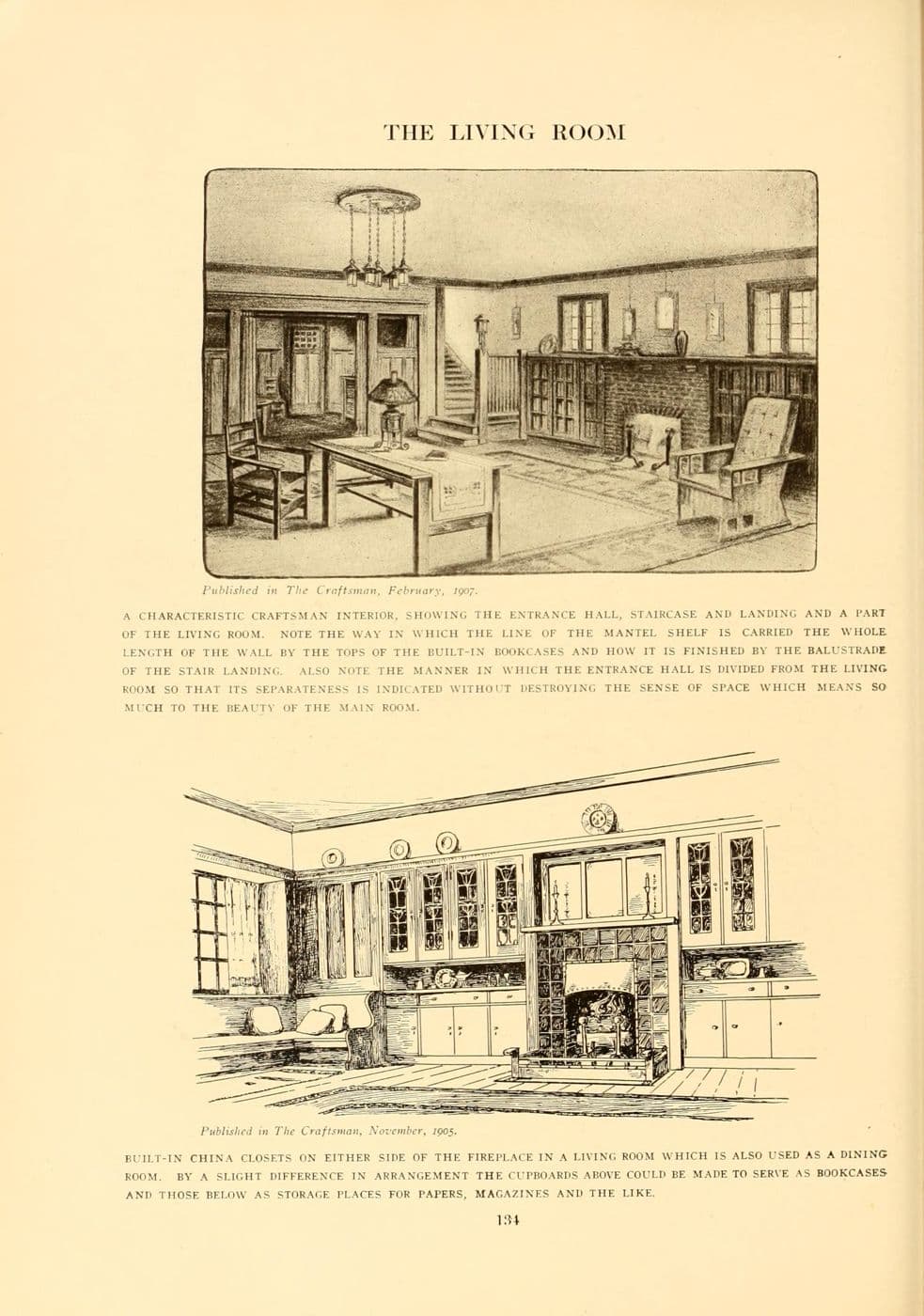
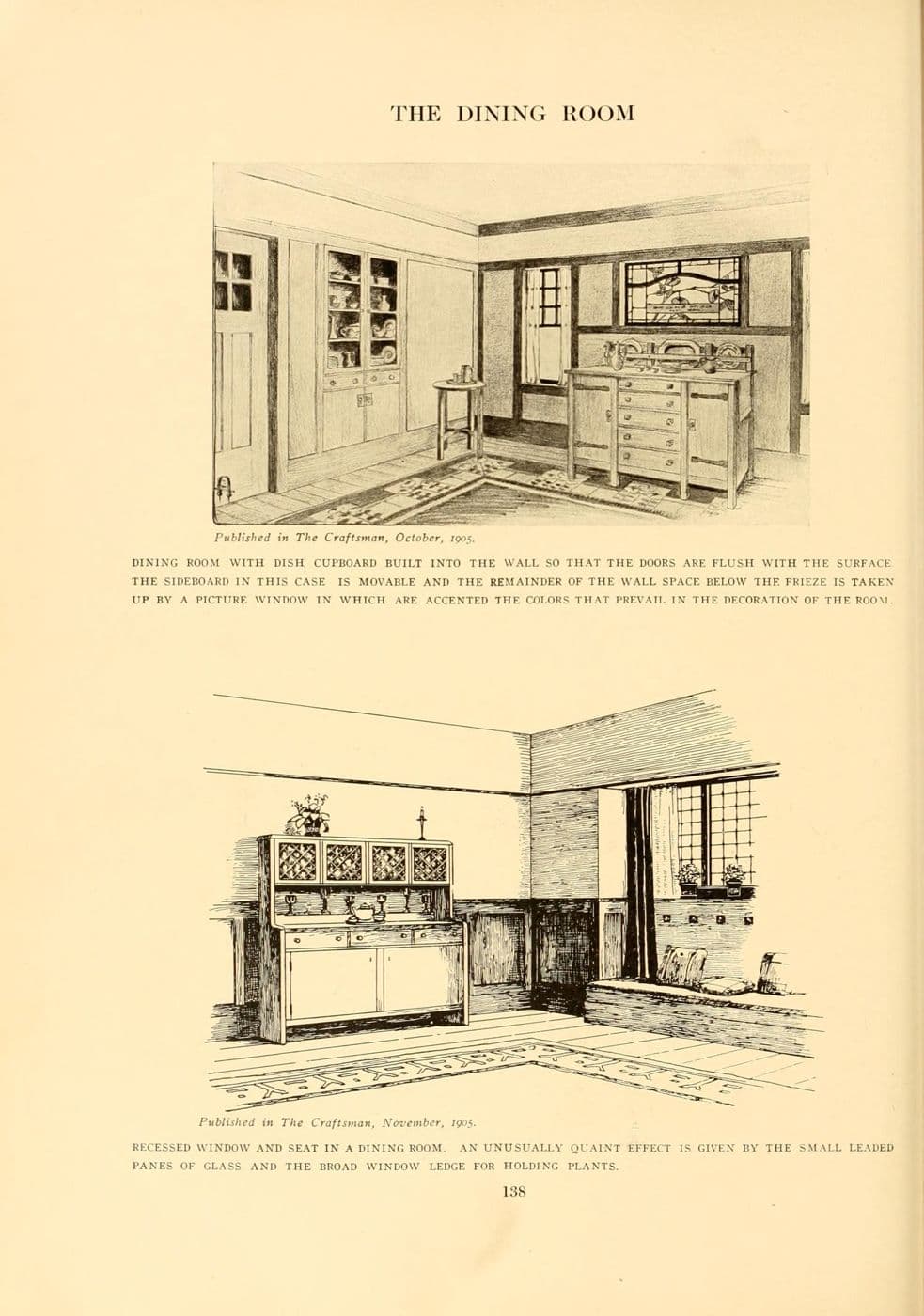
Honest materials, visible joinery and woodwork built into the room. Britain and the United States · c. 1880–1930.