Wall Paneling & Wainscoting · Tudor & Tudor Revival
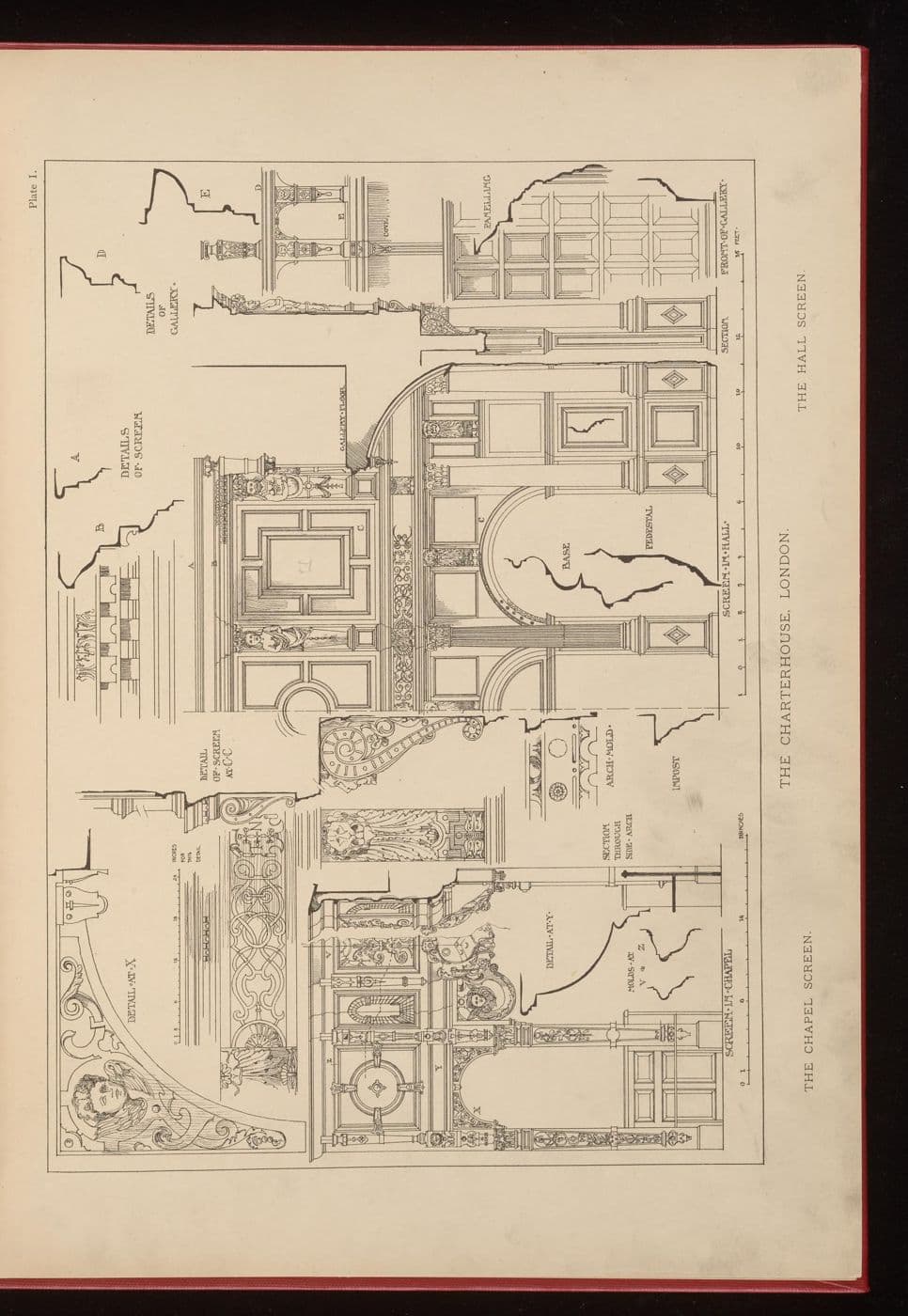
The Hall Screen, The Charterhouse, London (measured drawing, 1903)
A measured drawing from Henry Tanner's English Interior Woodwork (1903) of the carved oak hall screen at The Charterhouse in London, a 16th-century Tudor interior.
Design characteristics
In Tudor halls, a wooden screen separated the main hall from the service passage, often with a gallery above. Tanner's plate records the Charterhouse screen in elevation and detail, showing its arcaded openings, carved frieze and pilasters. Measured drawings like these are especially useful for reproduction work because they give real proportions and profiles. A screen of this type can be adapted as a room divider or a decorative entry partition.
Classification
- Category
- Wall Paneling & Wainscoting
- Material
- Oak
- Motifs
- Hall screen, Carved frieze
- Published
- 1903
- Maker or designer
- Henry Tanner
- Evidence
- Period catalog illustration
Architectural context
Dark oak paneling, linenfold, strapwork and heavy plank doors. England · original c. 1485–1603; revival c. 1890–1940.