Cabinet Doors & Fronts · Victorian (Queen Anne, Eastlake)
E. W. Godwin Anglo-Japanese Sideboard (designed 1867)
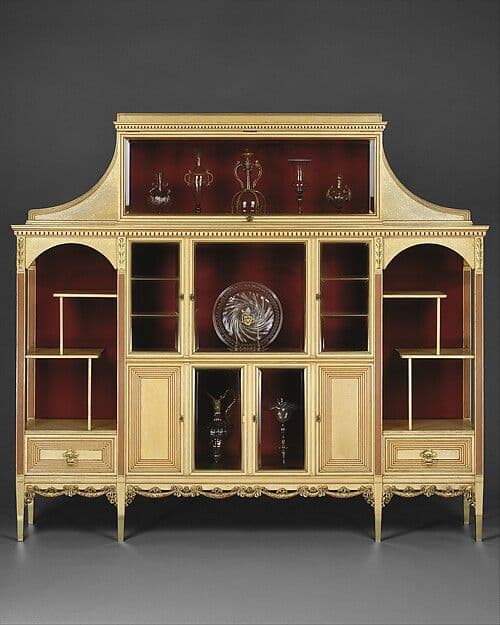
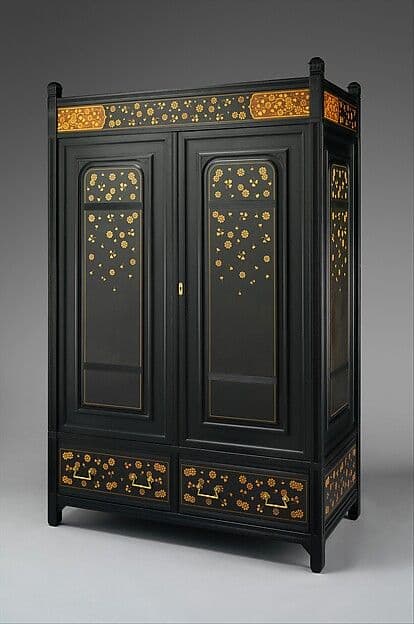
An ebonized mahogany sideboard designed by Edward William Godwin in 1867 and made by William Watt around 1876, a landmark of the Anglo-Japanese style.
Design characteristics
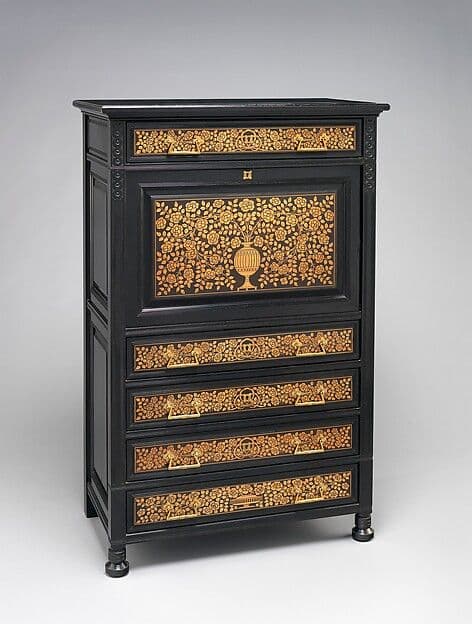
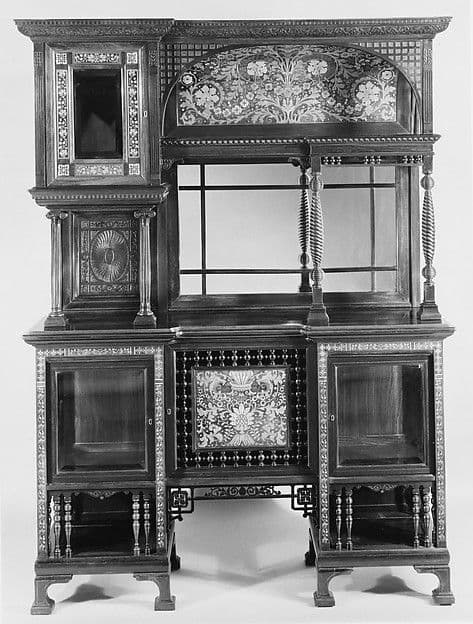
Godwin's sideboard looks surprisingly modern for the 1860s. Inspired by Japanese architecture, he reduced the piece to a black rectilinear frame of thin members, open shelves and a few closed cupboards with simple brass fittings and leaded glass. The empty spaces matter as much as the solid ones. This is a valuable reference for clean-lined cabinetry that still feels historic: open shelving supported by visible frames, flat slab doors, and a single dark finish. It sits comfortably next to contemporary interiors.
Classification
- Category
- Cabinet Doors & Fronts
- Material
- Ebonized mahogany, Brass, Glass
- Motifs
- Anglo japanese grid
- Date
- Designed 1867, made c. 1876
- Maker or designer
- Designed by Edward William Godwin (English, 1833-1886) Made by William Watt (English, 1834-1885) London
- Recorded medium
- Ebonized mahogany with glass and silvered brass
- Dimensions
- 181.6 × 255.3 × 50.2 cm (71 1/2 × 100 1/2 × 19 3/4 in.) (with leaves e×tended)
- Evidence
- Documented historical object
- Source
- Art Institute of Chicago
Architectural context
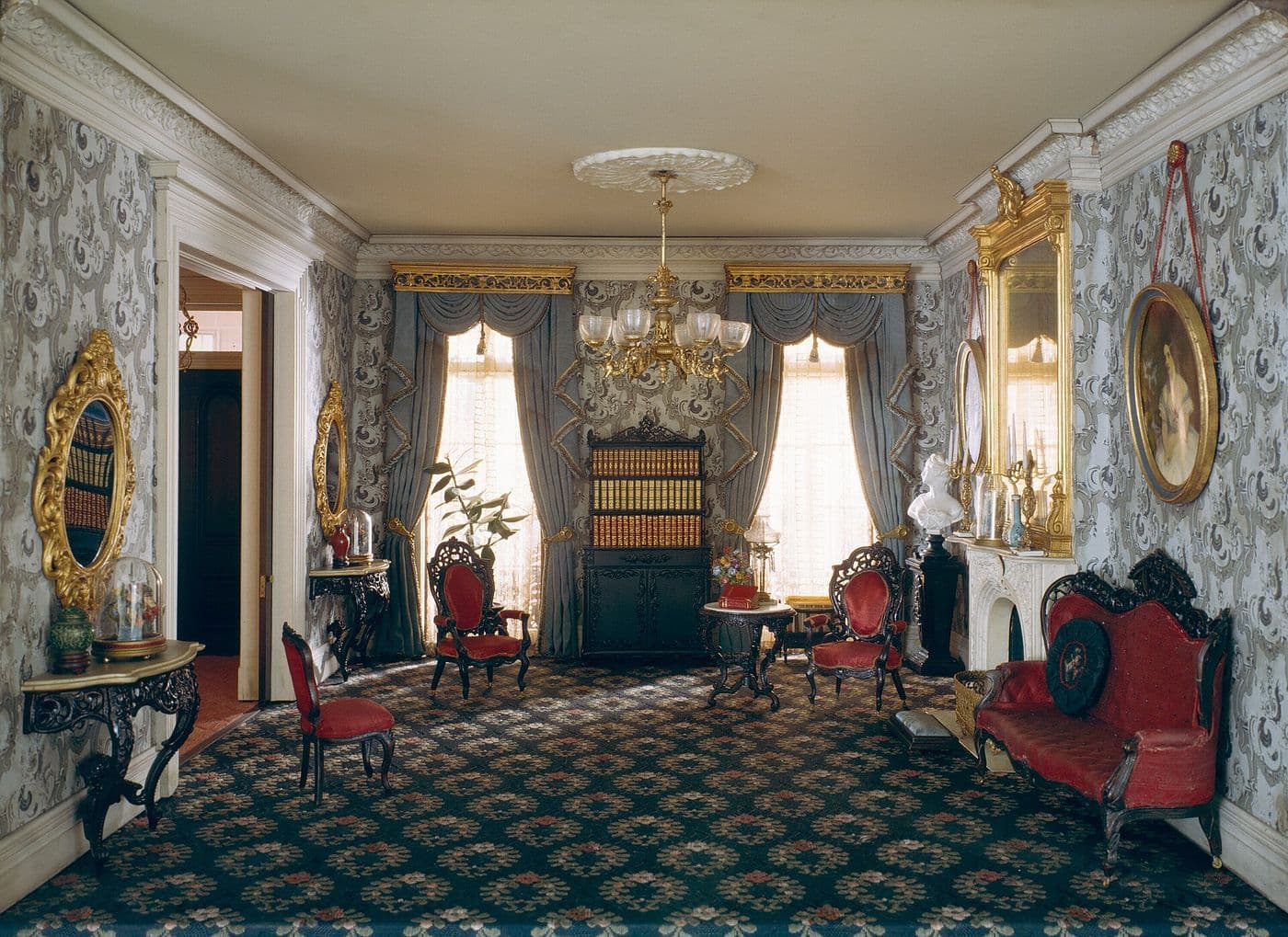
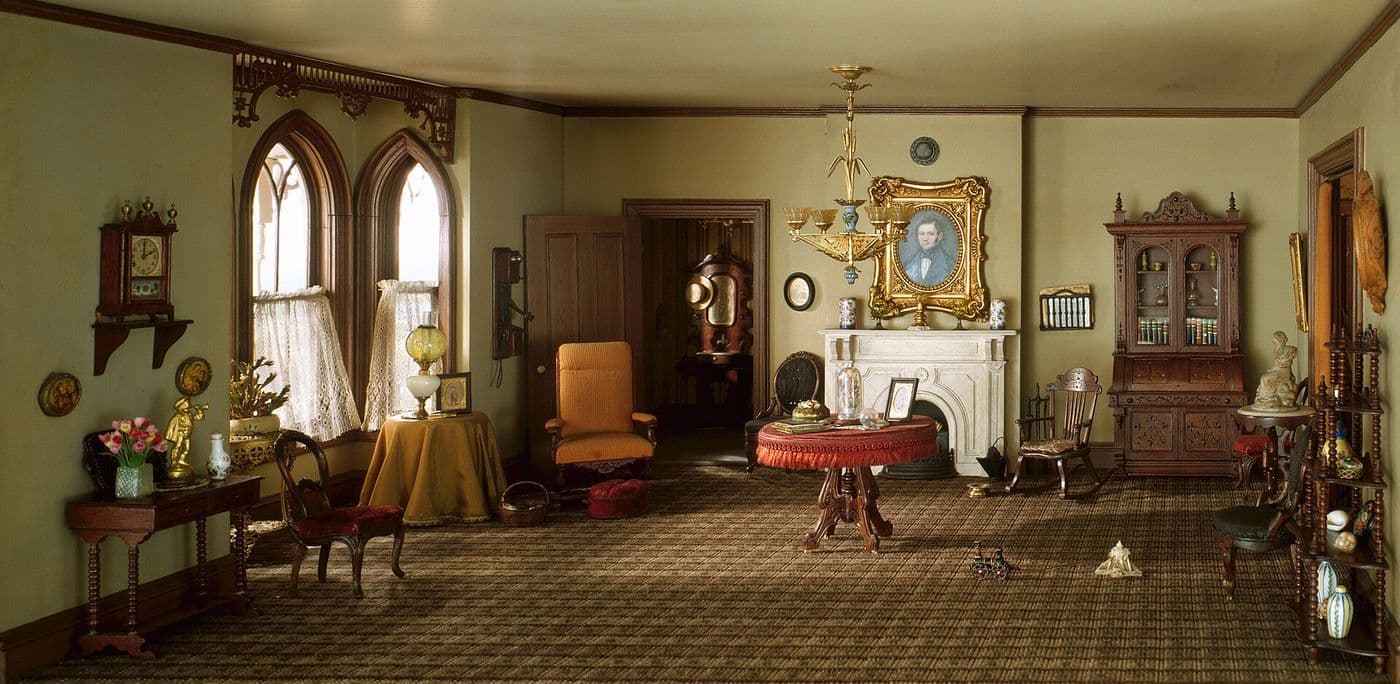
Carved mantels, layered trim and dark, decorative hardwoods. Britain and the United States · c. 1837–1901.